Vertical Pull · Assisted pull-up machine
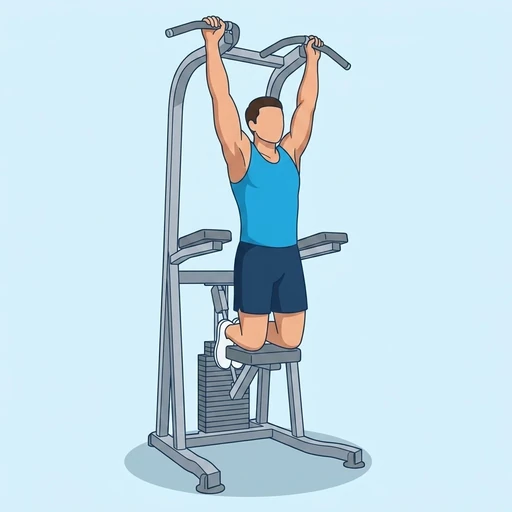
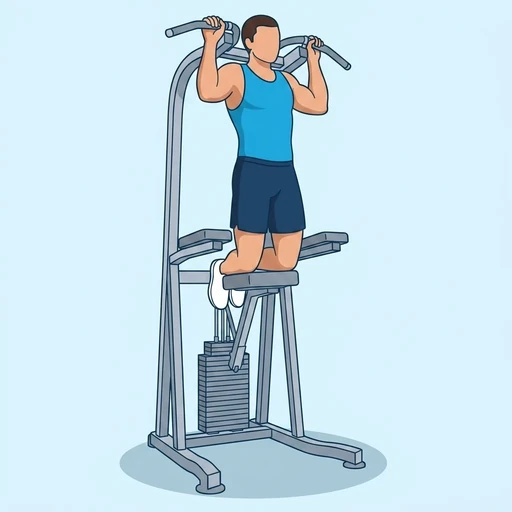
Assisted Pull-Up
Primary muscles: Lats; upper back; biceps
Exercise data by RepDB (repdb.co)
Why It's In ASF Programs
A machine- or band-assisted pull-up lets you train the full vertical pull before you can lift your own body weight. It builds the lats, upper back and biceps, and it is the most direct route to your first unassisted pull-up.
Coaching Notes
Progress by reducing the assistance a little at a time once you own the top of the rep range. Start every rep from a full hang with the shoulders set, and finish with the chest moving toward the bar rather than the chin reaching over it.
Setup
- Select enough assistance to complete controlled repetitions.
- Position knees or feet on the machine support as designed.
- Grip the handles and begin from a controlled long-arm position.
How To Perform It
- Drive the elbows down as you pull your body upward.
- Keep the torso controlled without swinging.
- Lower slowly to the start before repeating.
Key ASF Cue
“The assistance helps you practise the pull - do not bounce off the support pad.”
Common Mistakes
- Using too little assistance and shortening the range.
- Swinging for momentum.
- Relaxing abruptly into the bottom.
Alternatives / Substitutions
How ASF Programs It
Where the Assisted Pull-Up appears in the ASF 12-week systems, with Phase 1 sets × reps (later phases progress load, reps or sets):
- 12-Week Fat Loss System — Phase 1 (4-day plan): Upper B: 3 × 8–12
- 12-Week Lean Muscle Building System — Phase 1: Upper B: 2 × 6–10
Safety Note
Follow the machine instructions for entering and exiting safely.